The advent of the year 1000 was accompanied by fear for the end of the world, thought to coincide with the end of the millennium. After the danger was over, this fear passed and was replaced by a desire for beauty. Thus the era of cathedrals began, when “Christians competed to build churches one more beautiful than the other”, as written by Rodolfo il Glabro in his “Cronache”.
Around the year 1000, Giovinazzo also gained a new cathedral, which does not correspond to the current romanic cathedral of Santa Maria Assunta. This was a paleochristian church dedicated to the Virgin Mary, now the Church of St. John the Baptist, which was situated near the eastern walls, built there in order to protect the town from attacks. Its millenary history is tied to the adjacent Benedictine monastery and its powerful abbesses in black, nuns of the Rule of St. Benedict of Norcia.
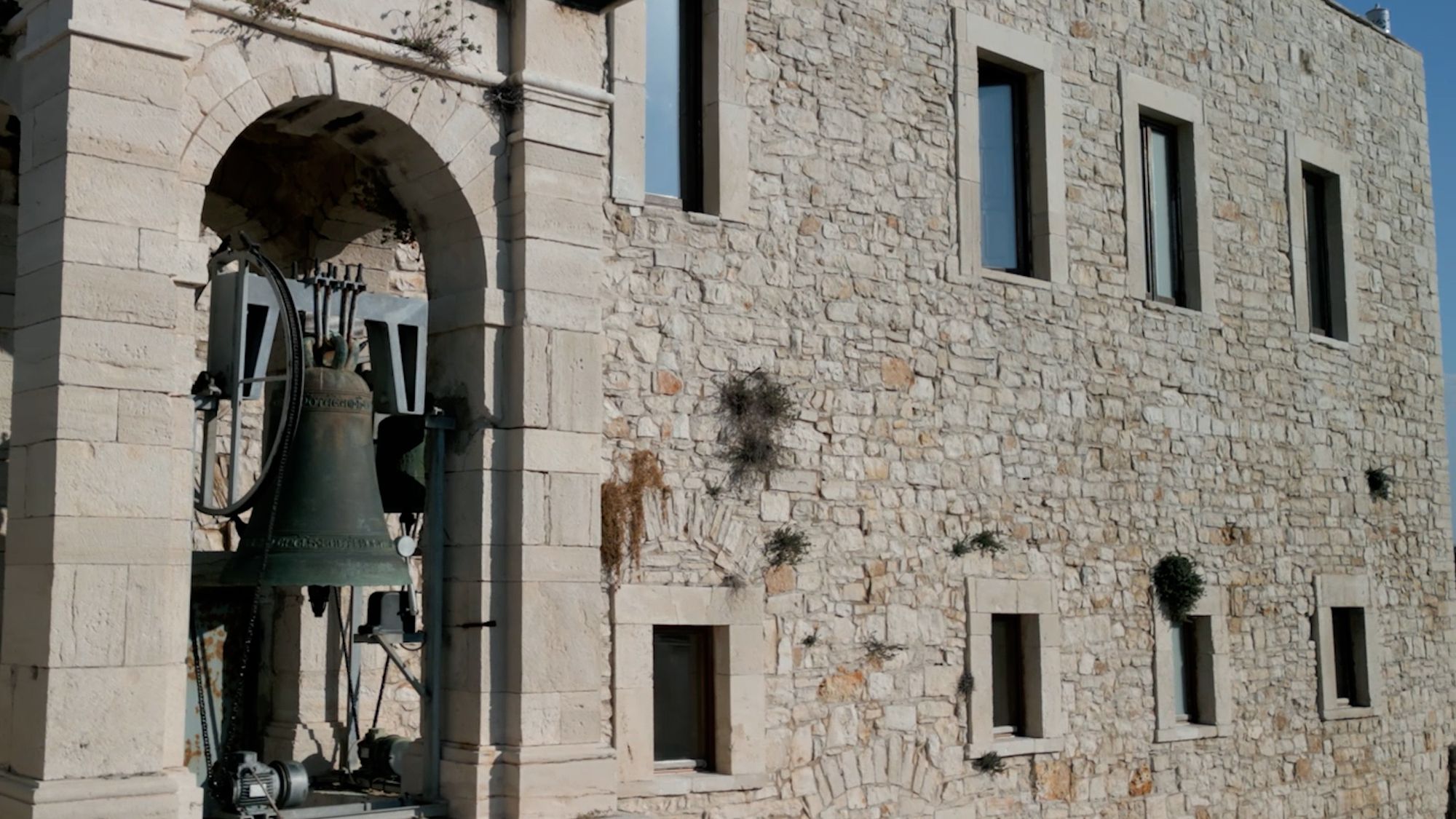
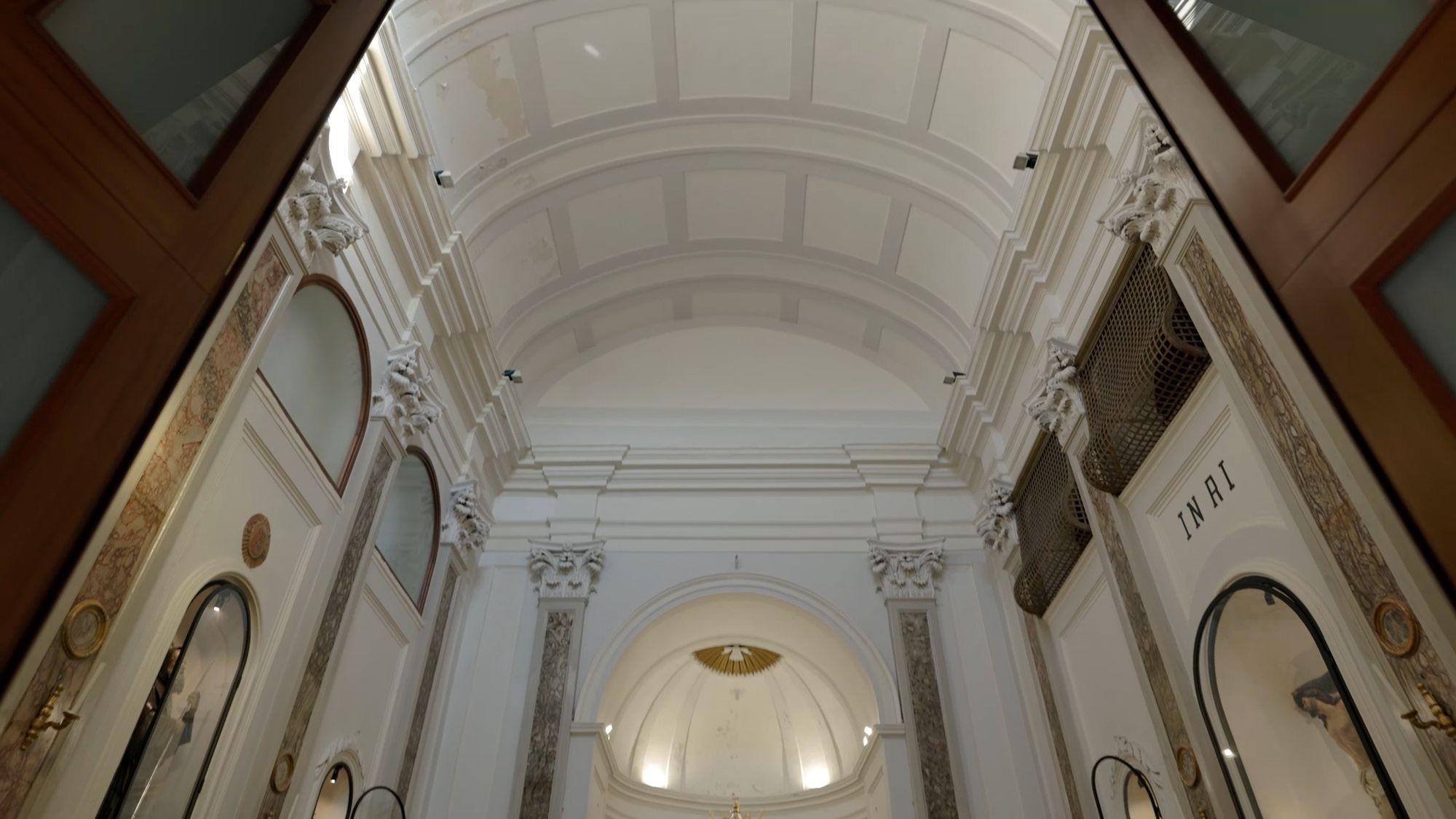
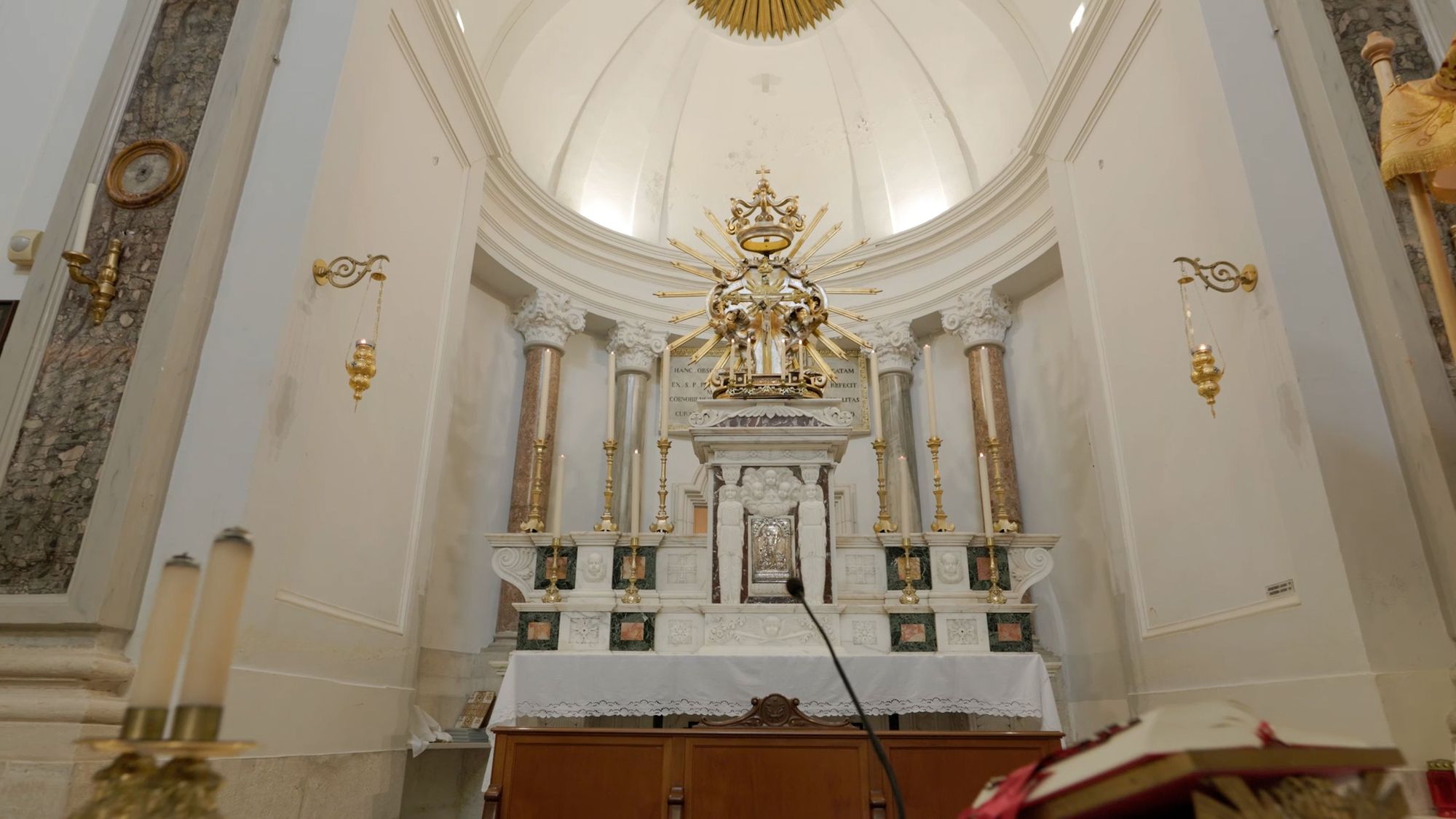
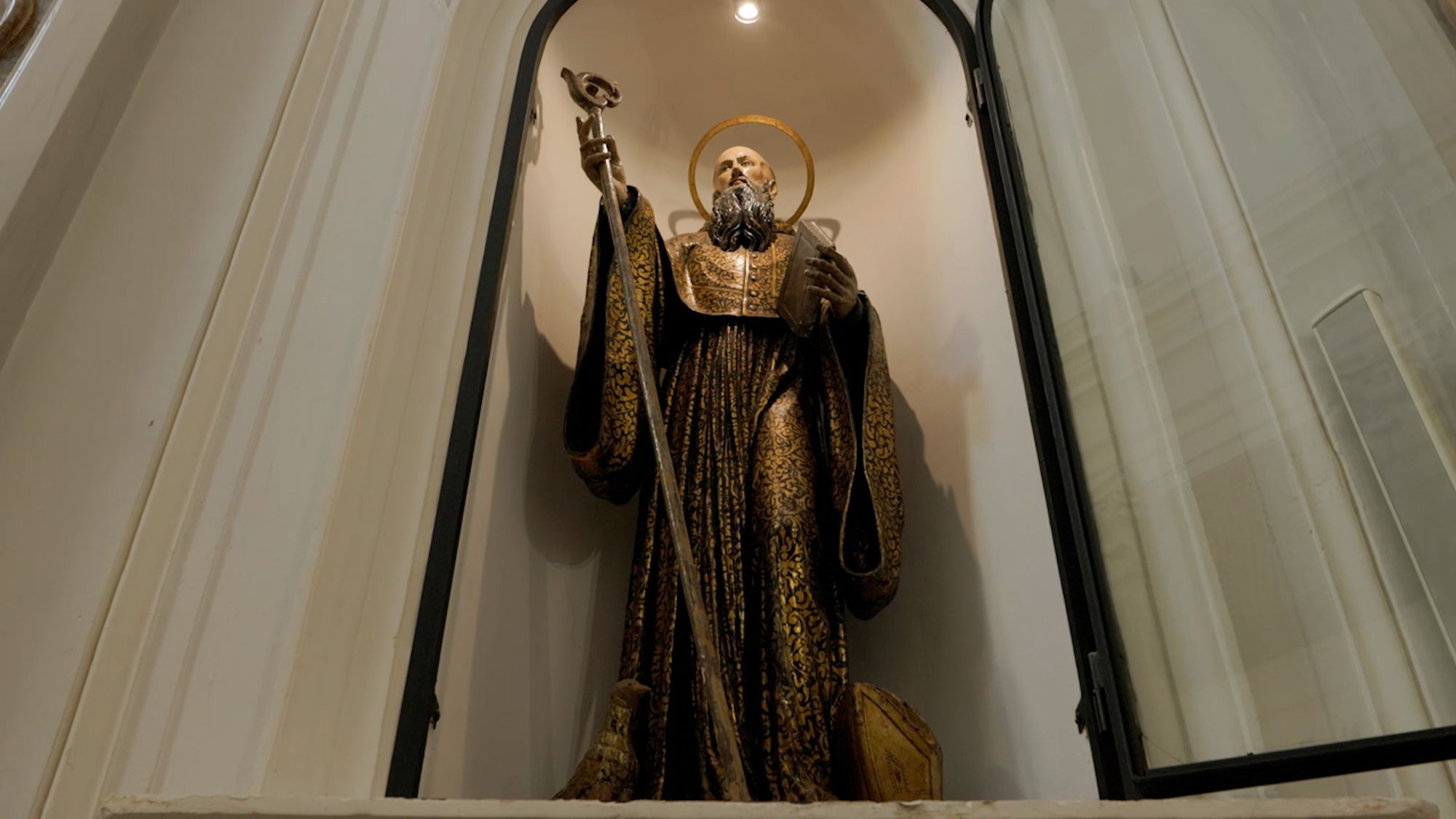
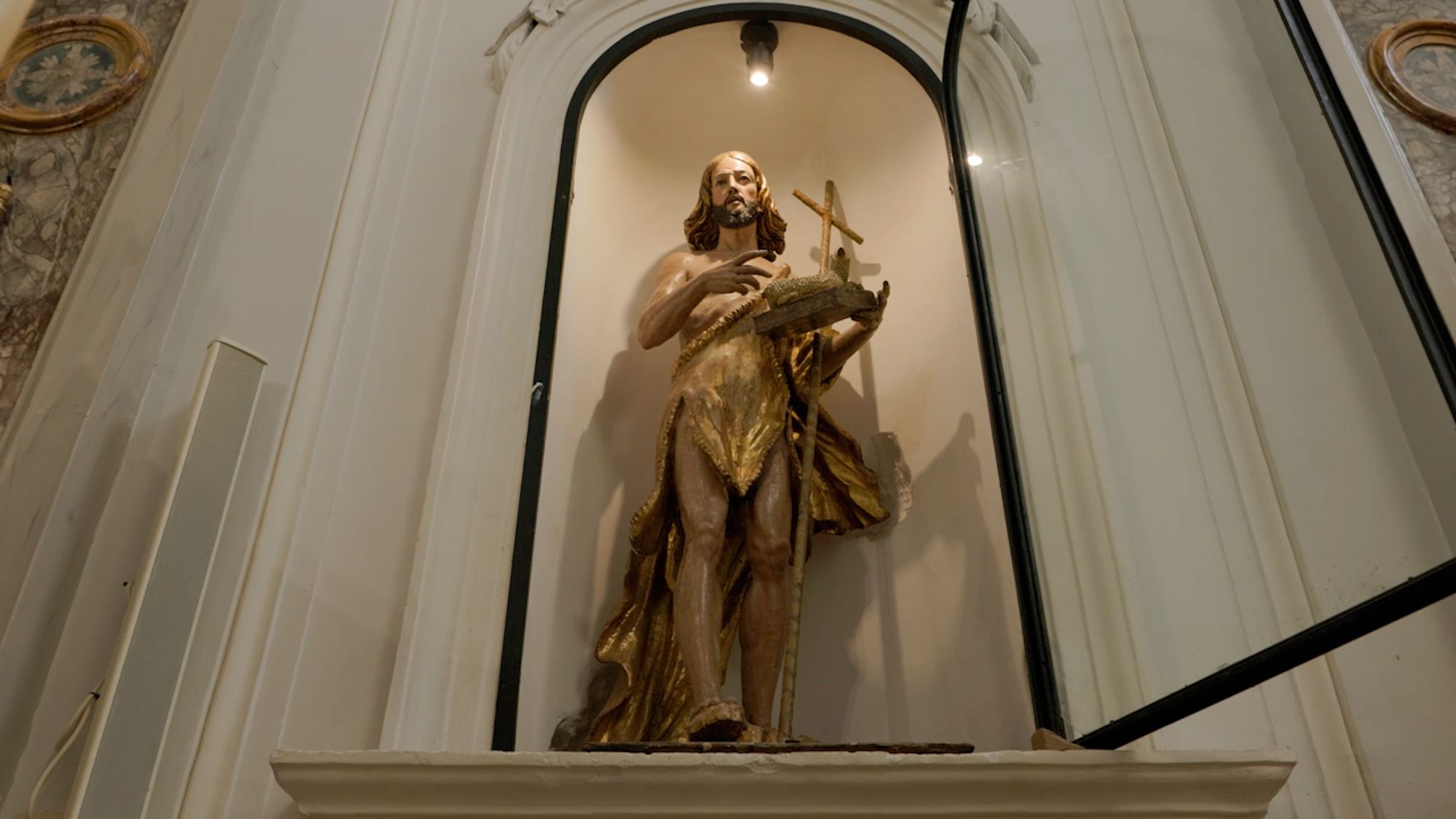
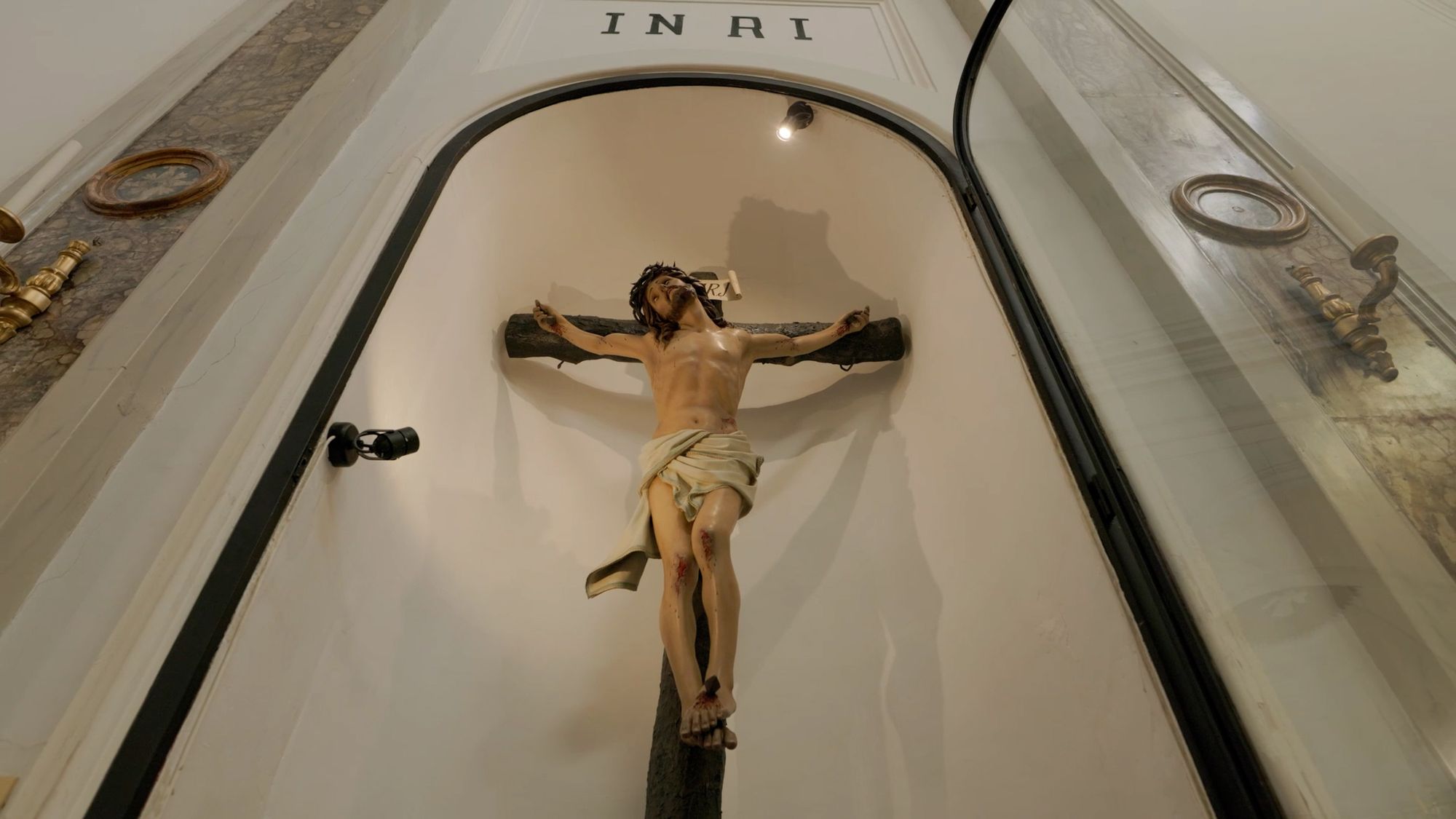
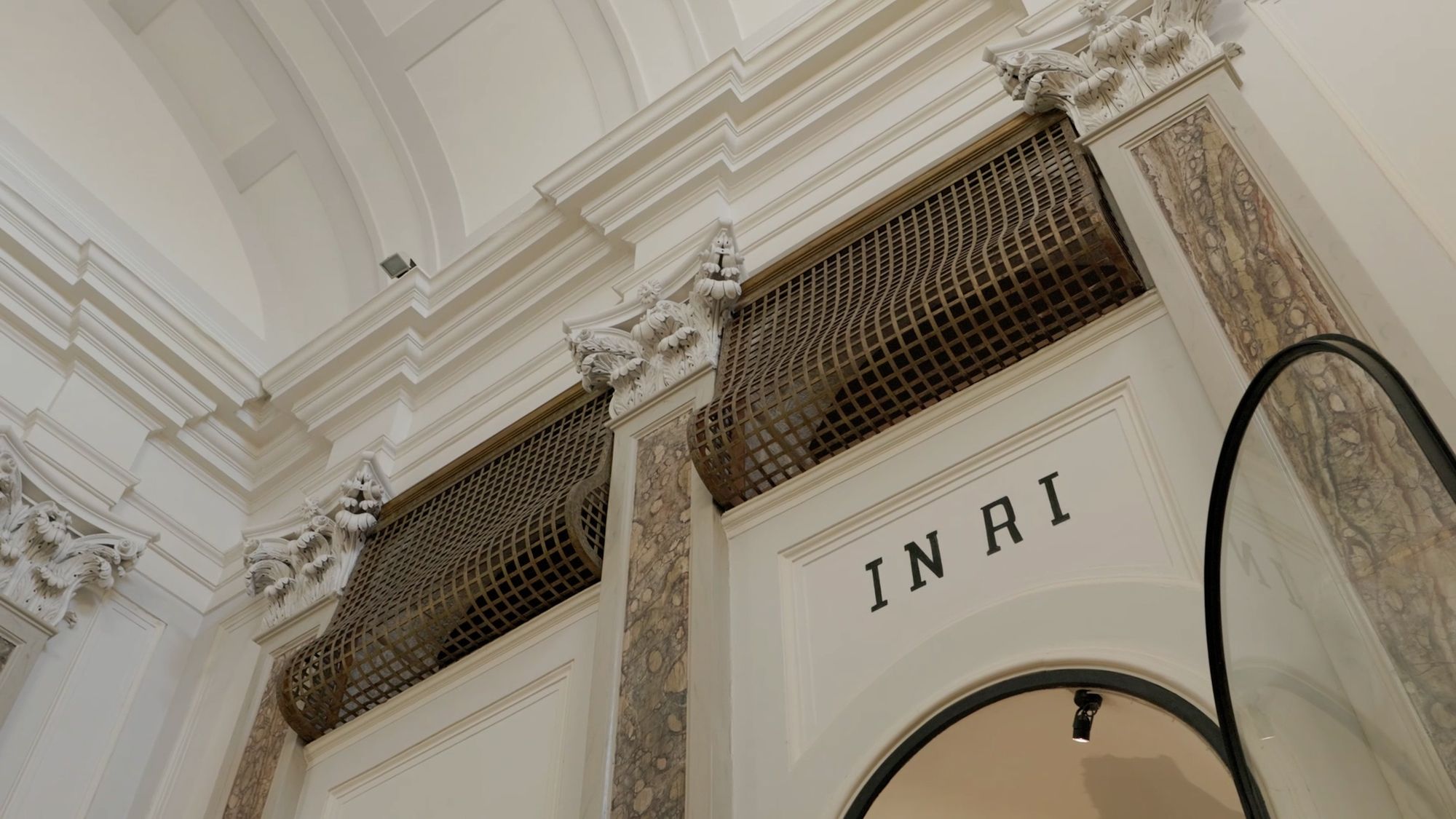
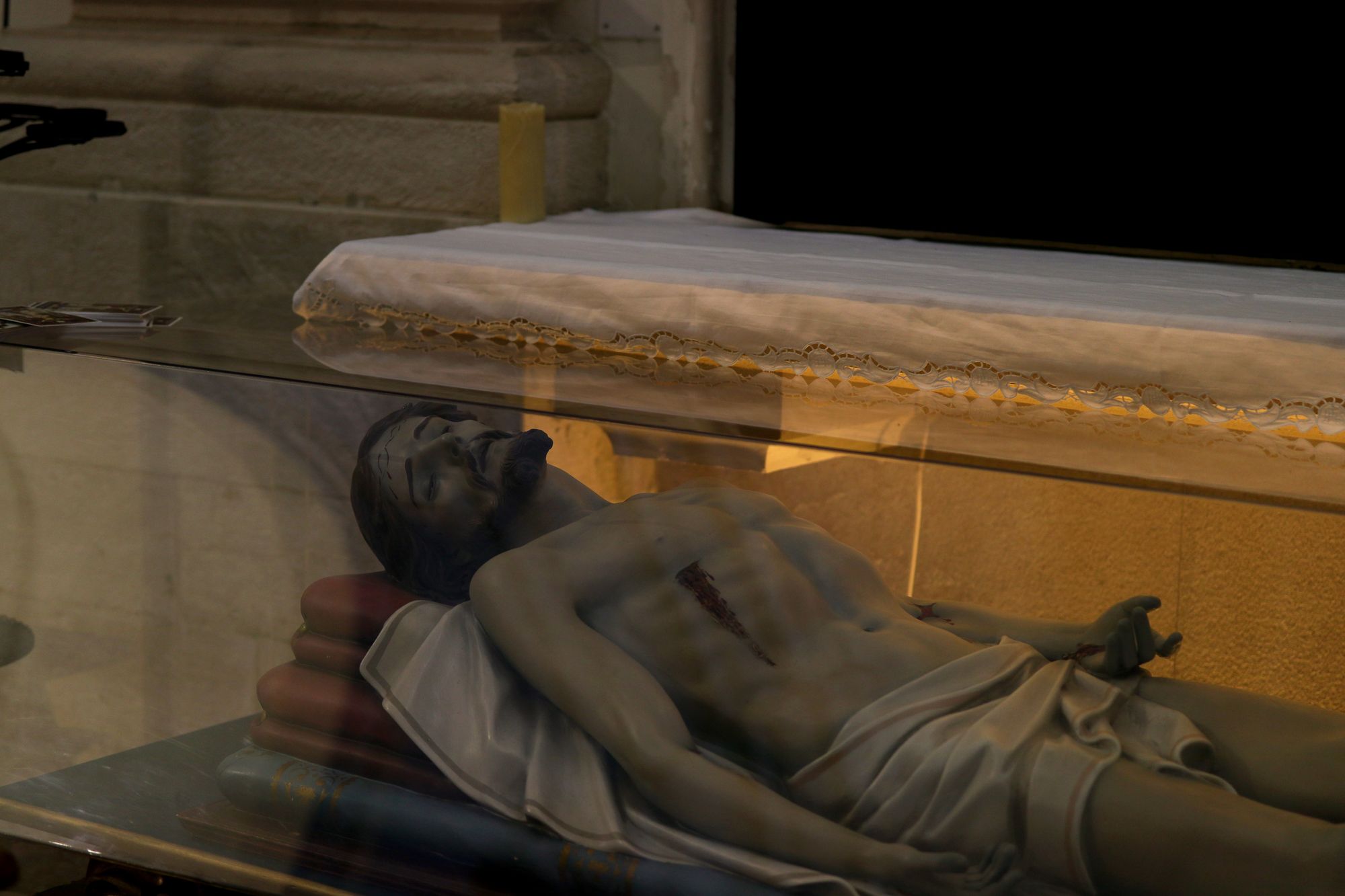
Today very little remains of the ancient medieval church. The current church has a neoclassical façade and an elegant bell tower. A barrel vaulted ceiling can be admired inside the church and in the presbytery is a refined altar in coloured marble. Many works of art adorn the church: the wooden statues of St. Benedict and St. John and the more recent statue of St. Francis of Paola which until a short time ago was carried in the procession at sea, and the papier-mâché statue of Christ in Agony, one of the mysteries of the Good Friday procession, work of Giuseppe Manzo of Lecce. Higher up are windows protected by grills which allowed the Benedictine nuns to be present at religious functions without being seen.
Through the small door to the right of the entrance,a short statue-lined corridor leads to the back of the presbytery. What remains of the sacred treasure of the Benedictine nuns is preserved here, abandoned when they left the convent at the end of the 1800s. On the other side of Piazza Benedettine, next to the church of San Giovanni Battista, stands the noble Palazzo Severo Vernice, currently under restoration.