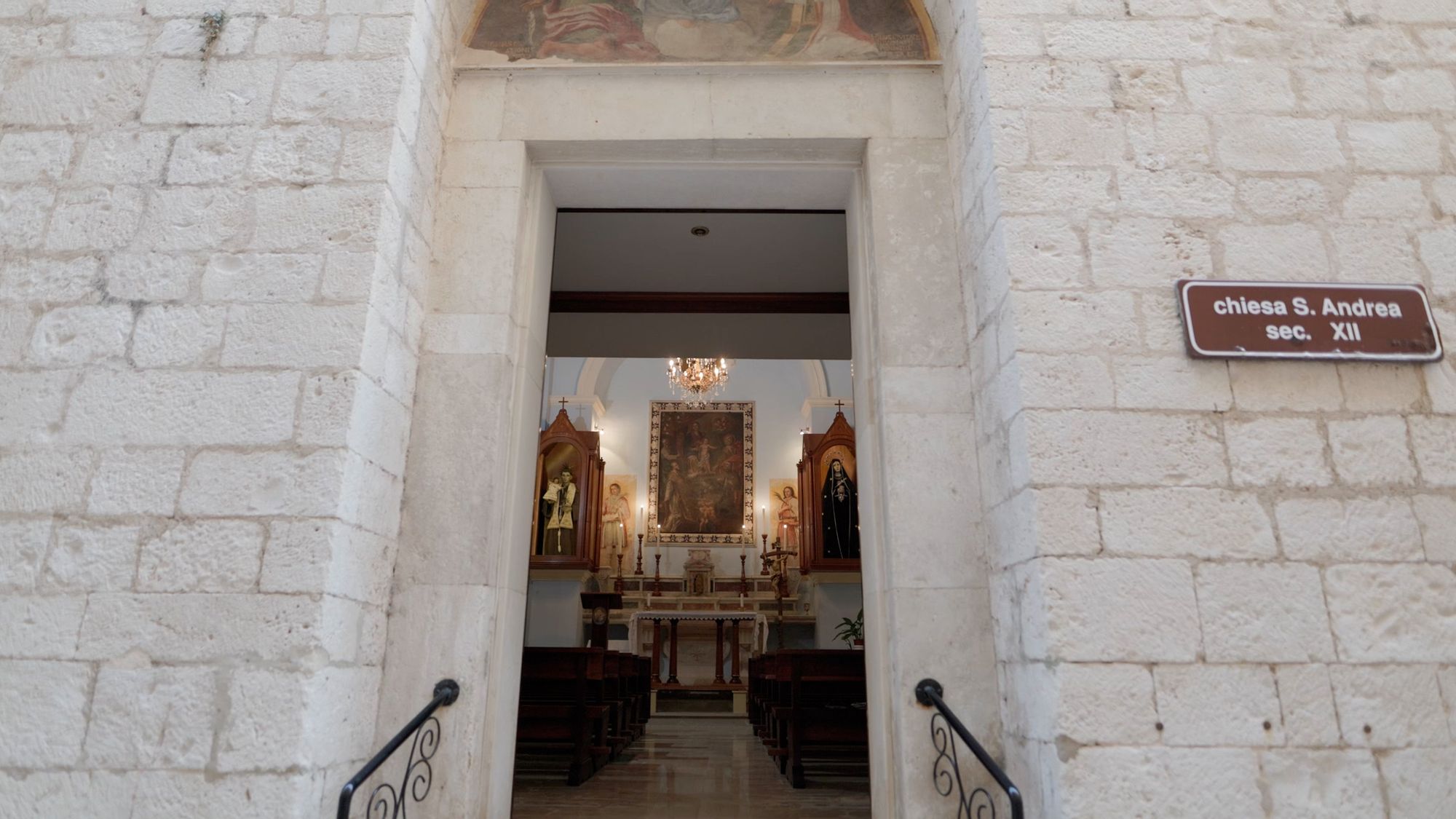
Chiesa S. Andrea
(12th century)
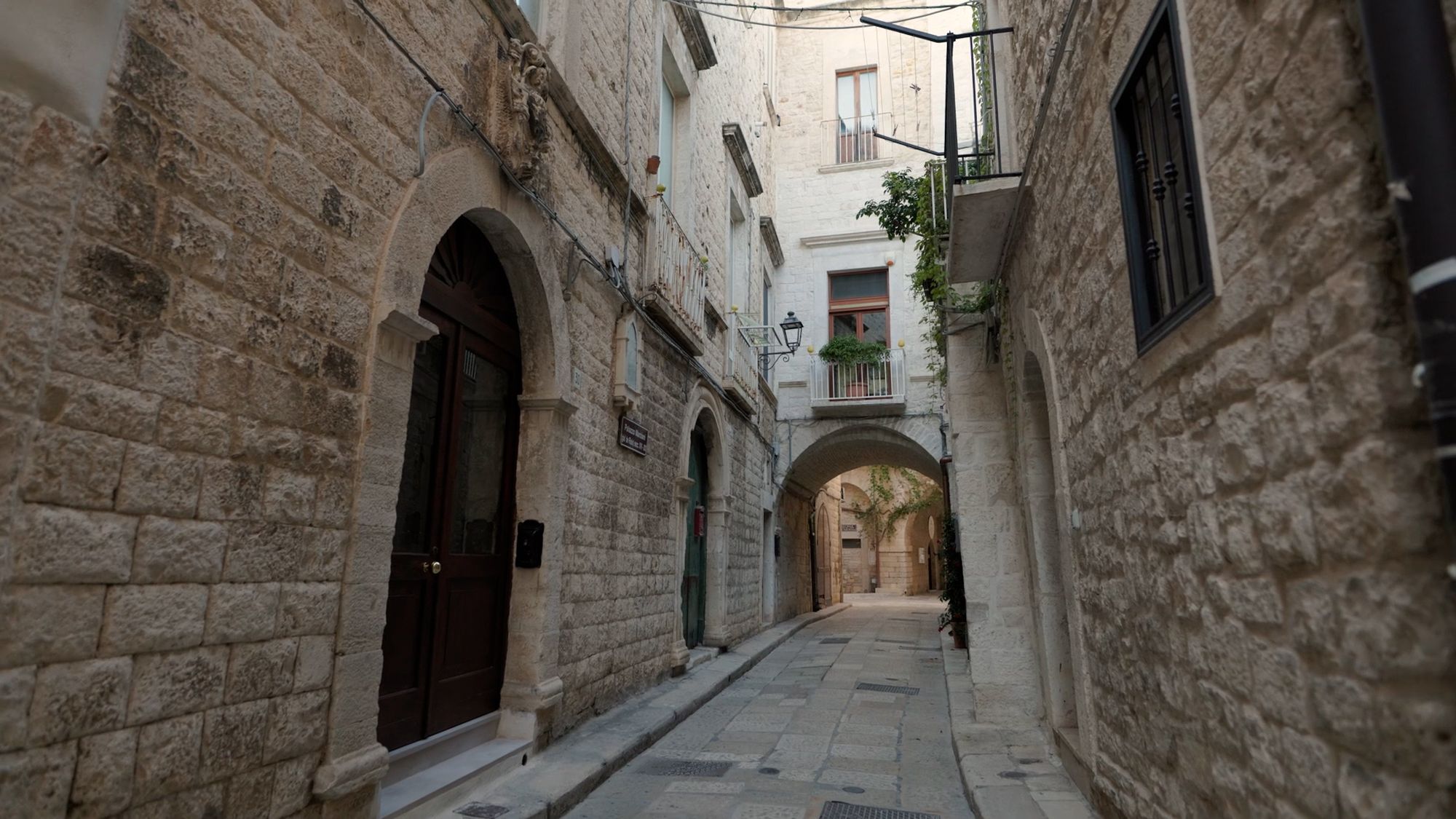
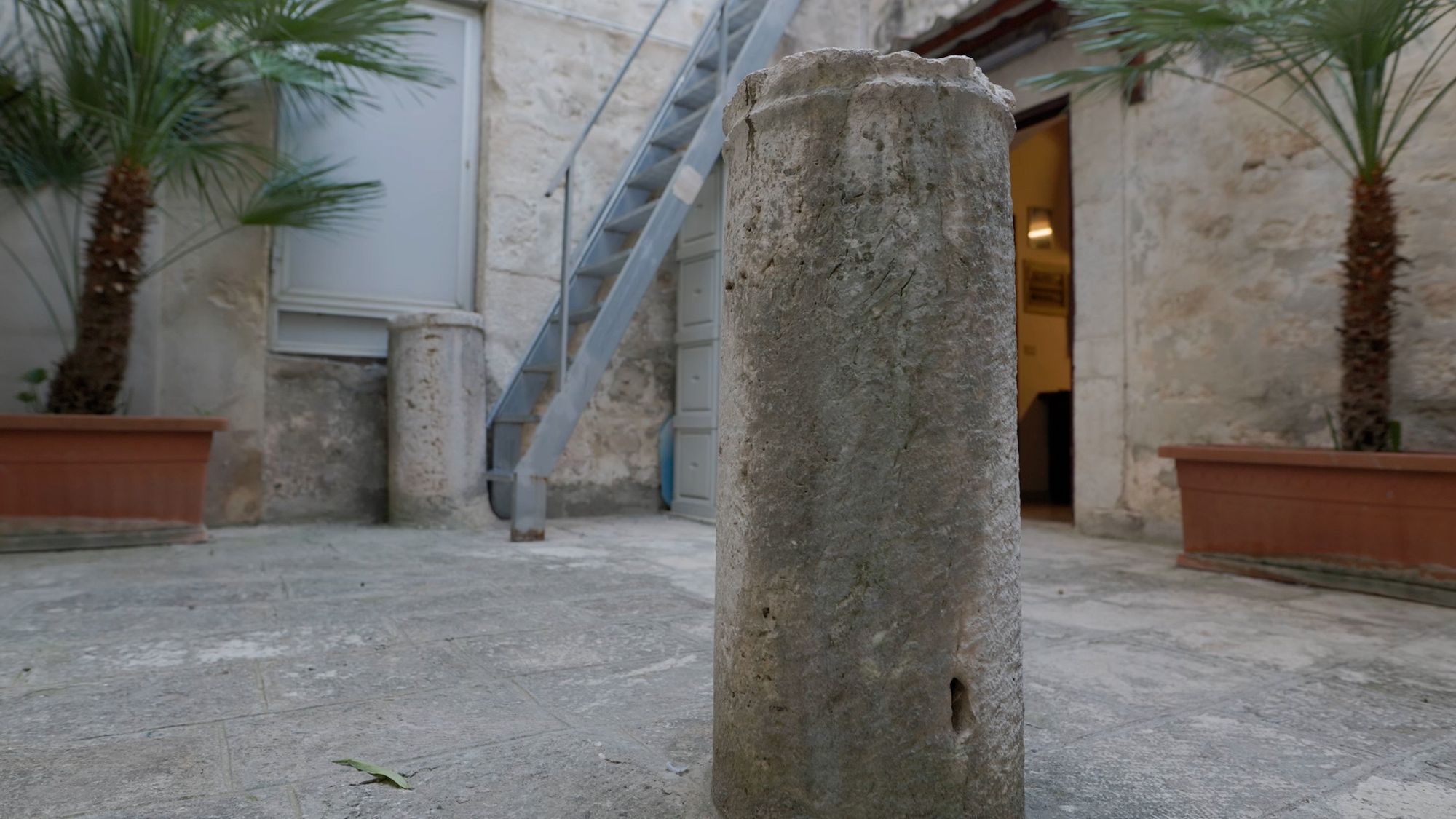
Almost hidden from view in the narrow roads of the old town, the church of Sant’Andrea evokes the history of centuries. Inside the church the atmosphere seems suspended in time and the ancient stones seem to whisper secrets of past times. Two column shafts stand in the adjacent courtyard, the remains of a distant and glorious past.
The church was made a parish by Bishop Briziano de la Ribera but its prestige was soon overshadowed by the nearby Cathedral. Over the centuries, Sant’Andrea has changed appearance and name, known originally as San Carlo with the privileges of the ruined church of San Bartolomeo. Later it was the seat of the confraternity of St. Ignatius of Loyola and today it is affectionately known as “la Gialuid” which refers to the bright yellow of the cape worn by the Brothers of Purification. From the outside, the church blends in with the surrounding buildings but on closer inspection, precious details can be observed : a lunette with a fresco painted by Saverio De Musso and a window decorated with acanthus flowers, revealing the sober and hidden beauty of this sacred place. An arched bell tower stands out above the church, a symbol of simplicity and devotion.
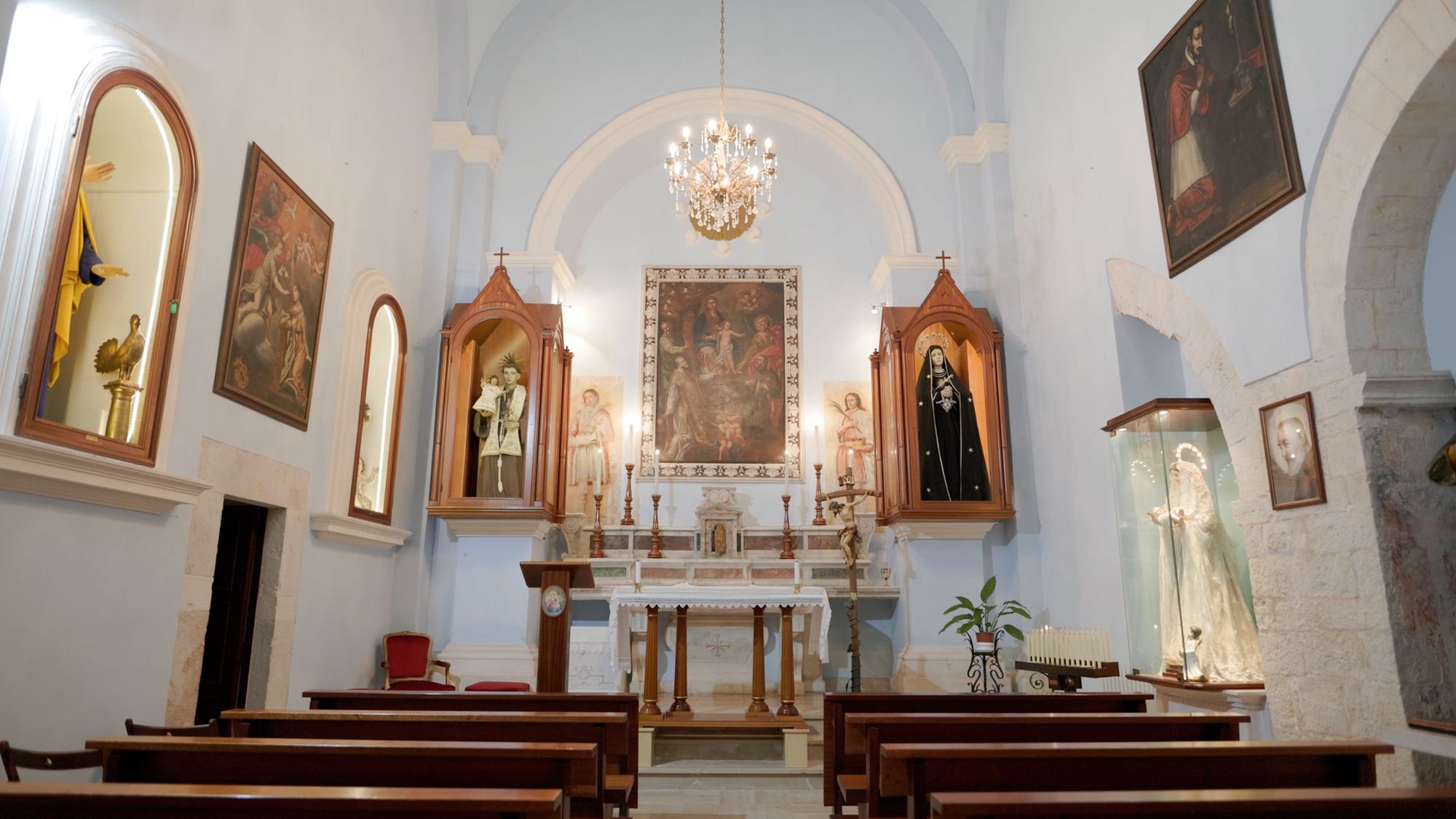
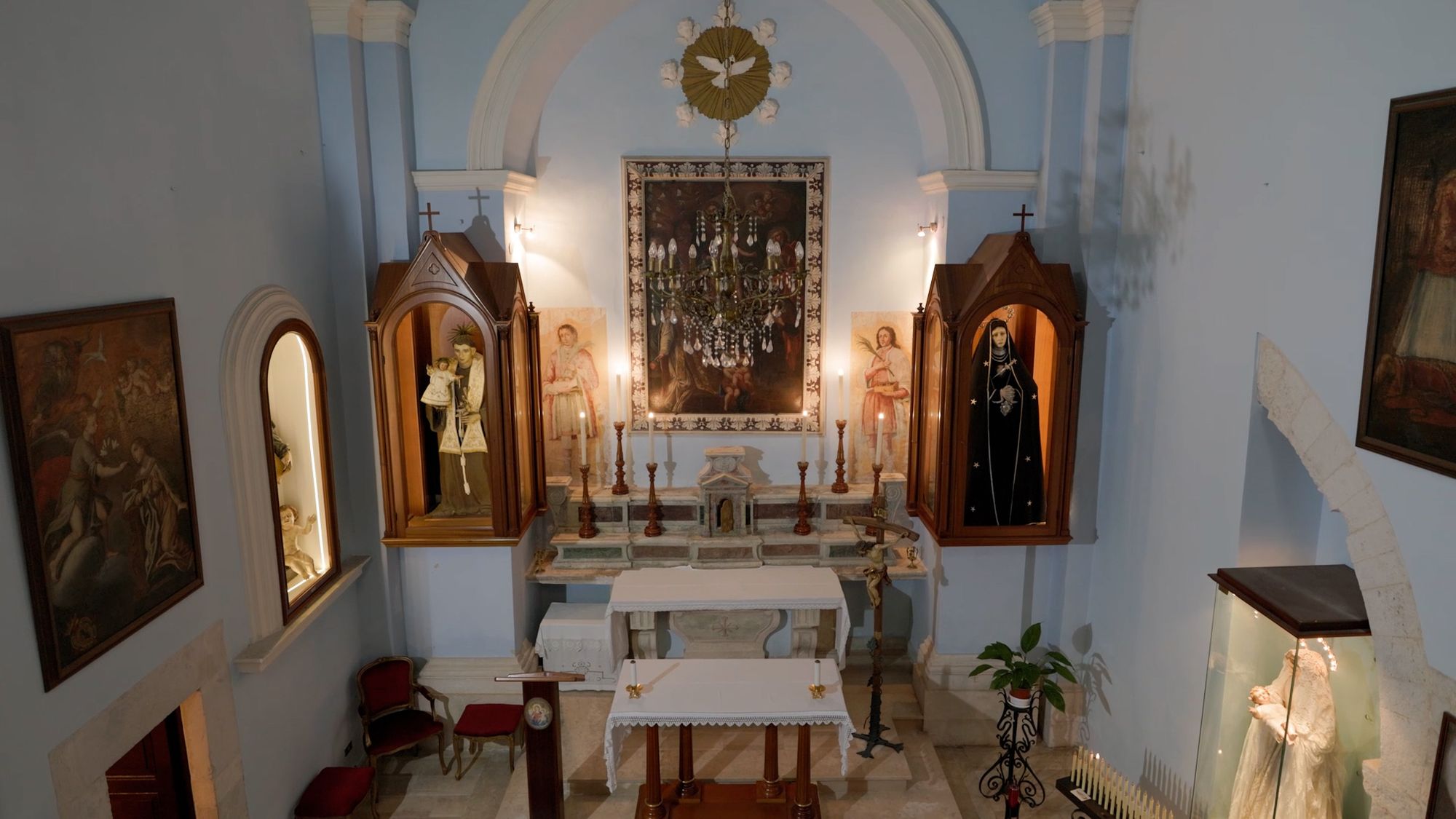
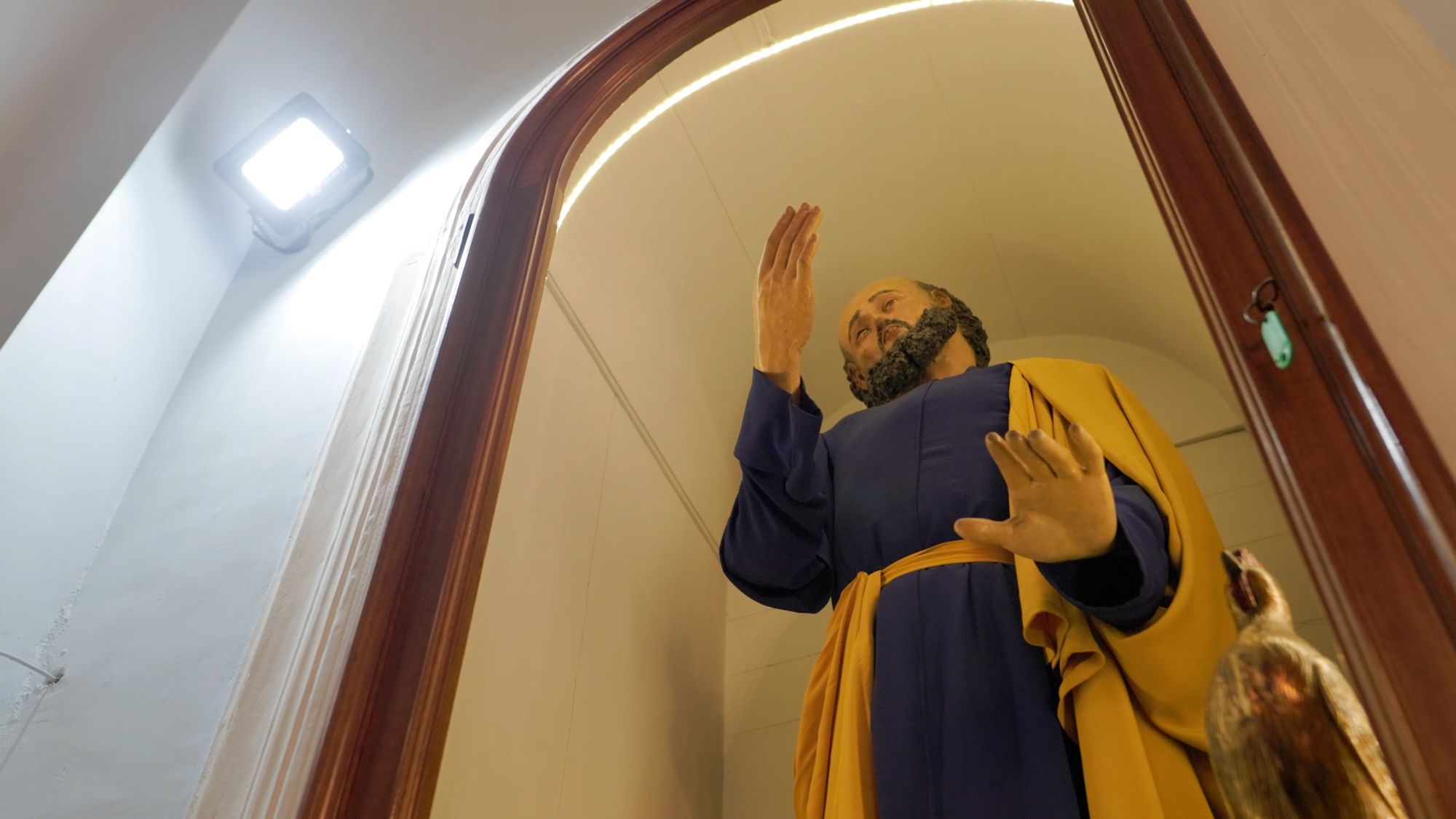
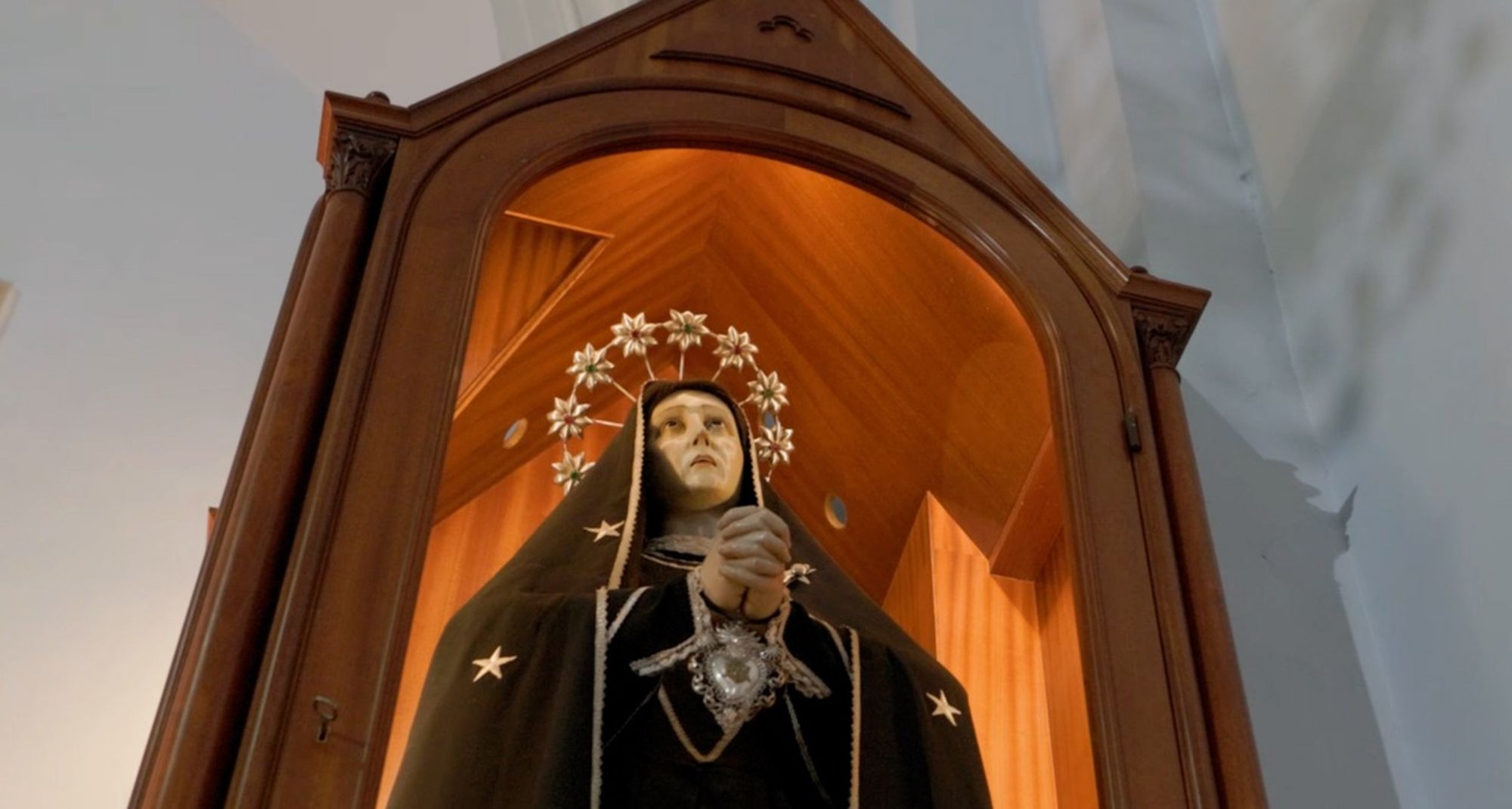
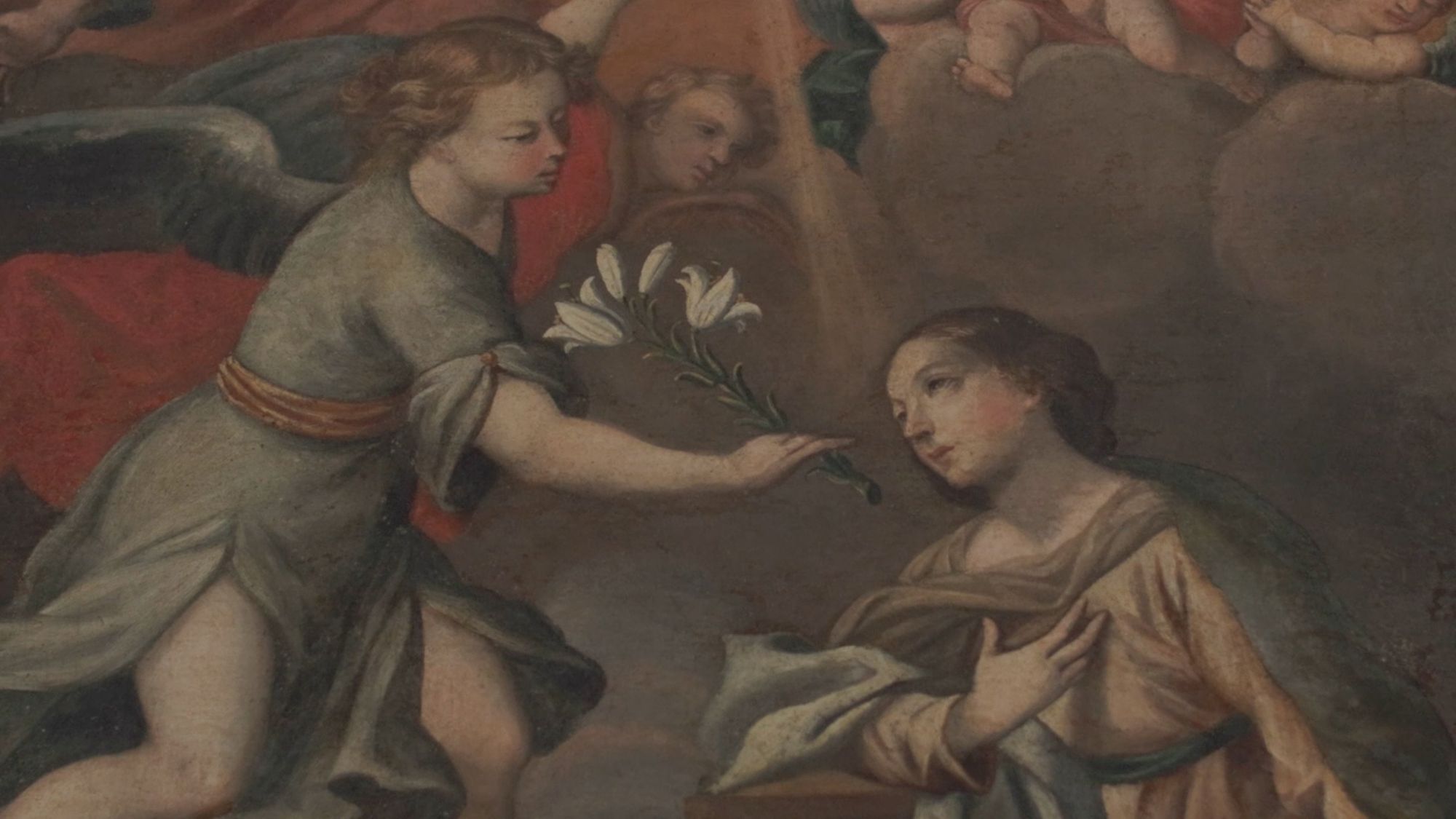
Valued works of art can be admired within the church, including two paintings by Saverio De Musso: La Madonna della Purificazione (Our Lady of Purification) and the Annunciazione (the Annunciation), the latter dating back to 1699 and donated by the noble Famarino dei Malatesta family of Rimini. The true focus of popular devotion however is the statue of the Madonna Addolorata (Our Lady of Sorrows), housed in the church for most of the year. During Holy Week the statue is moved to the co-cathedral where, on Easter Monday, the ancient rite of the “Madonna sotto l’organo” takes place. In this poignant reenactment, the statue of the Virgin Mary is carried on the shoulders of the Brothers along the central nave to symbolically meet her Son, dying on the cross, a tradition that moves and unites the entire community of Giovinazzo. Almost opposite the church stands the imposing Palazzo de Risis, better known as Casa Marziani. This noble building which belonged to the ancient de Risis family is on three levels including a basement level which joins up with the medieval city walls.