In 1480, the bloody seige of Otranto at the hands of the Turks marked the beginning of a new era for the Adriatic cities of Puglia. The Ottoman raids could not even be stopped by the powerful Venetian army and the invention of gunpowder was a serious threat.
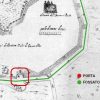
Alfonso of Aragon was the first to understand the urgent need for intervention to modernise and secure the town, work which was undertaken with determination by the Prince of Melfi, Giovan Battista Caracciolo, captain of the French militia. The new city walls, with their projections, towers and bastions, were a work of art of military engineering at the time, and included the expansion of the pre-existing moat which connected the sea to the port, offering extra protection against enemy attacks.
When the era of wars and feuds was finally over, the moat lost its strategic function. It was drained, filled and made into a public road. Today, this road is known as “Via Fossato” (“Moat Road”), recalling its former defensive function and keeping alive the memory of those turbulent times.
The name “Porta Nuova” (“New Gate”) which today indicates the hill leading from Piazza Vittorio Emanuele II towards the historical centre, comes from the opening of a new gate in the walls of the moat. This extra access was next to the only existing gate at that time, which was opposite the entrance to Arco Traiano.